
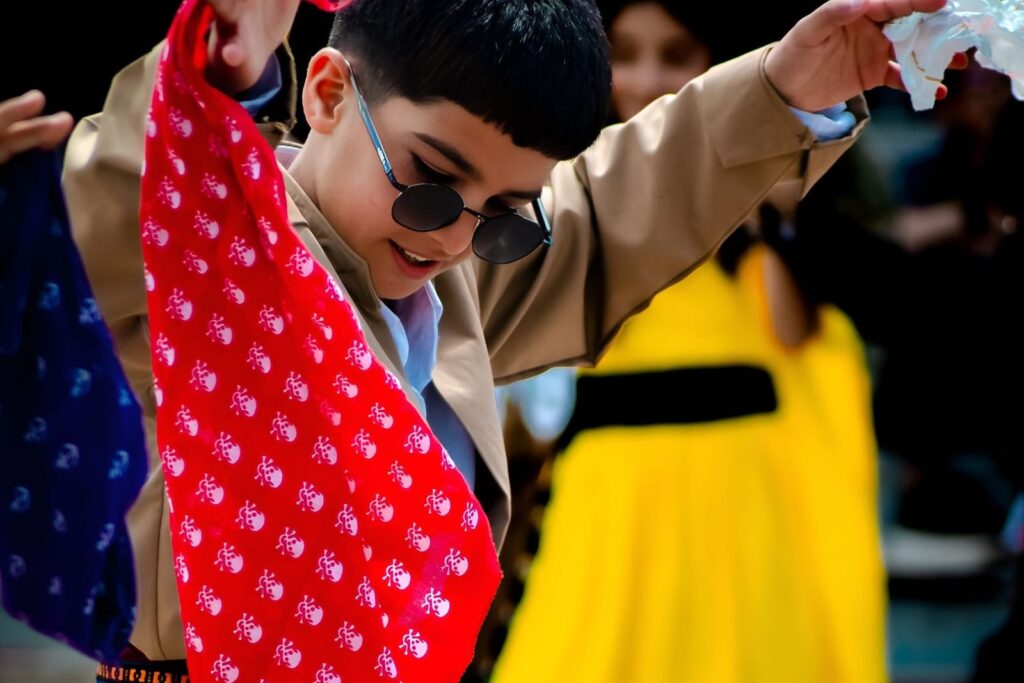
Govend is the Kurdish word for folk dances, especially those danced in a circle or a line while holding hands or shoulders. It appears at weddings, holidays, Newroz celebrations and festivities of every kind.
One circle, one rhythm
The most distinctive feature of govend is that everyone is connected. Dancers hold each other’s hands or shoulders, and the steps change together as the rhythm changes. It can be slow and measured, or fast and exuberant. Usually the person at the head of the line sets the rhythm and direction, often with a handkerchief in hand, and the others follow.
It varies from region to region
Across the Kurdish lands, steps, movements, rhythm and the accompanying music differ from region to region. The drum and zurna are indispensable companions at weddings; today many govends are also danced to recorded music or modern instruments. What stays the same is that the dance is the performance of a community, not of one person.
Why does it matter?
Govend is more than a dance; it is a way of coming together: old and young meet in the same circle and follow the same rhythm. In this sense it is regarded as one of the symbols of solidarity, joy and sharing in Kurdish culture.
Want to hear govend?
You can listen to govend tunes and lively Kurdish music on Govend FM.